
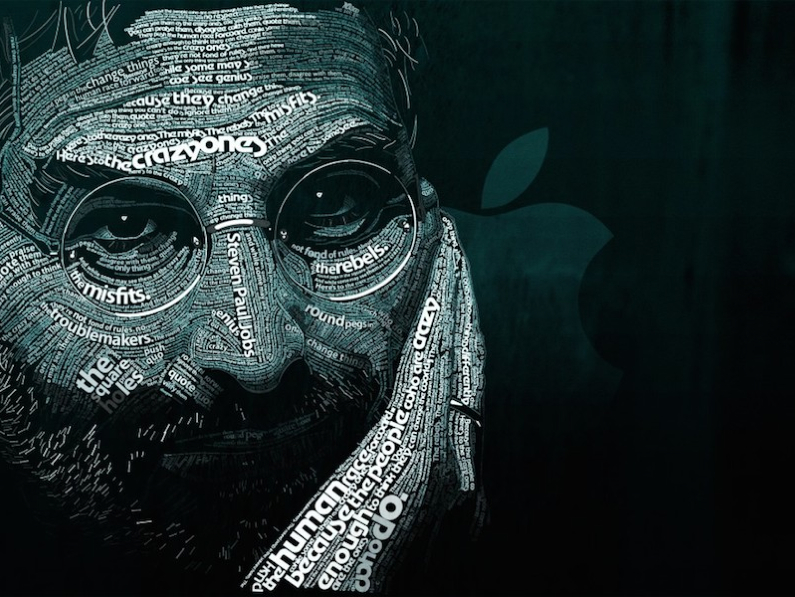
I’ve always been fascinated by typography. By crisp, pared down symbols in clear white space, the infinite variety of lines and curves that make up the letters of language. In my eyes, even the sample sheets for typefaces that display their letter shapes in different weights and sizes resemble beautiful, yet arcane, pieces of art.
By convention, many font libraries and foundries use pangrams to display the alphabets of each particular family because it’s often easier to get a feel for how a passage may appear on screen, or in print, if the characters express something meaningful instead of just being an inventory of letters.
At least, that’s the theory. But, as anyone who has ever tried to create a pangram, or even its baby sibling, the anagram, knows, maintaining clarity whilst still using all the letters, is a fiendish challenge requiring all the skills of a crossword demon. There are probably only a finite number of pangrams that make any sense at all and even those that have a degree of logic resemble babble. Compared to some examples, “the quick brown fox jumps over the lazy dog” is almost Shakespearean. It’s ironic that we should use nonsense to illuminate typography and lettering, one of the most brilliant achievement of the human mind. With language, the sum of the whole is infinitely greater than its parts.
But although the jumping fox, lazy dog and grumpy wizards making evil brews are familiar pangrams written in English, just about every language has pangrams and it’s amusing to make comparisons between them.
The nursery rhyme rhythms of:
“Five quacking zephyrs jolt my wax bed”
which is used by Apple for previewing True Type fonts in Mac OS X can’t compete with the evocative, yet somehow propagandist, fervour of:
“Ах чудна българска земьо, полюшквай цъфтящи жита”
Wonderful Bulgarian land, shake the blooming wheat-fields.
And the Bulgarians aren’t finished yet. How about the surrealist fancy of:
“За миг бях в чужд плюшен скърцащ фотьойл”
For a moment I was in someone else’s plush squeaking armchair.
Where I found myself struggling with fourteen across.
In Czech, the dazzling surrealism of:
“Nechť již hříšné saxofony ďáblů rozzvučí síň úděsnými tóny waltzu, tanga a quickstep”
Let the sinful saxophones of devils finally make the hall resonate with the frightful tones of waltz, tango and quickstep.
uses all the linguistic characters of the language, including the accents, as does this Finnish effort:
“Törkylempijävongahdus”
which literally translates as ‘Mucky snogger booty-call.’
Miley Cyrus eat your heart out. I have no idea how you muckysnog someone whilst doing a booty call. I do know, however, that there are apparently no ‘z’s in the Finnish language. Perhaps a mucky snog is something you get from an Ombie. Rick Grimes beware.
But if that sounds too much like ‘letter M’s behaving badly’, one can always rely on the French to offer a more seductive and elegant alternative.
“Portez ce vieux whisky au juge blond qui fume”
Take this old whisky to the blond smoking judge.
This could almost be the opening sentence of a scandalous roman a clef devoted to the contemplation of luxurious vices. Or perhaps just the latest twist in the affair d’Hollande, delivered with a characteristic shrug in a cloud of Gauloise.
In comparison to that sleek French effort, one of the best German pangrams:
“Falsches Üben von Xylophonmusik quält jeden größeren Zwerg”
Wrong practising of xylophone music bothers every larger dwarf.
just comes across as trying too hard. Look, it’s funny. It really is.
This Hebrew pangram
” דג סקרן שט בים מאוכזב ולפתע מצא חברה “
A curious fish sailed the sea disappointedly, and suddenly found company.
seems like a parable whereas the Gaelic language goes the whole Catholic hog:
“D’ḟuascail Íosa Úrṁac na hÓiġe Beannaiṫe pór Éaḃa agus Áḋaiṁ”
Jesus, Son of the blessed Virgin, redeemed the seed of Eve and Adam.
Italian is characteristically nonchalant:
“Qualche notizia pavese mi fa sbadigliare”
Some news from Pavia makes me yawn
whereas Korean is scrupulously methodical and precise, as befits the home of some of the world’s leading technology companies. If only the instruction manuals were quite so clear as:
“키스의 고유조건은 입술끼리 만나야 하고 특별한 기술은 필요치 않다”
Kiseu-ui goyujogeoneun ipsulggiri mannaya hago teukbyeolhan gisuleun pilyochi anhda
which means:
The essential condition for a kiss is that lips meet and there is no special technique required.
Perhaps the Korean letters need to spend more mucky snogging booty time in Finland
Polish offers this profoundly sad and reflective pangram:
“Mężny bądź, chroń pułk twój i sześć flag”
Come on, drop your sadness into the depth of a bottle!
which seems fitting given the country’s often troubled modern history.
But having investigated all these pangrams from around the world, for nonsense, lunacy, wisdom and fun, my favourite has to be this offering from the Ukraine:
“Жебракують філософи при ґанку церкви в Гадячі, ще й шатро їхнє п’яне знаємо”
The philosophers beg near the porch of the church in Hadiach, and we even know their drunk tent.
Which I interpret as a warning: don’t trust people who say they are cleverer than you, or who claim to have special insight because the chances are, they’re going to lead you to ruin. Or put simply, avoid alcohol, religion and smarty pants and you’ll do alright in life.
If that’s not a parable, I don’t know what is.